Monday, January 18, 2016

A Week with Disney - a consultant's review

Last week, my family and I (Figure 1) embarked on a full week of the Disney experience. This included 3 days in Walt Disney World and a 4-day cruise aboard the Disney Dream liner. Much has been written and said about the Disney experience in general. Let’s get beyond the obvious (it’s great for families; it’s expensive; it’s “magical”) and note the 3 best things and 3 not-so-great things about the experience.

The 3 Best Things

The staff

For decades now, Disney has been renowned for it’s impeccable service. Well, in 2016 it can’t be overstated how consistently good the staff is. Every employee from the captain of the Disney Dream to the room attendants at the Beach Club was as friendly and personable as the most gregarious bartender at your local watering hole or touristy pub in a major city. Everyone seems to hit that sweet spot of being friendly and professional without being annoying or insincere. No offstage business was conducted in front of customers.

Cleanliness

Normally, the state of cleanliness and sanitation is one of those things you don’t take note of unless something is wrong. At Disney World and on the Disney Dream, things are so tidy that you start wondering if there are any flaws in this area. Run you finger on a surface in a dark corner of the Tower of Terror attraction and find no dust. Note the man in the Magic Kingdom carefully wiping morning dew off of the garbage containers. See the person polishing the chrome on a junction box in the corner of a deck on the Disney Dream. Look hard and fail to any quality issues or inconsistency in the presentation of the 100-foot long breakfast buffet over 4 mornings. It all adds up to total confidence in the sanitation and, particularly on the cruise ship, safety.

Impeccable processes

As consultants we know that consistency at the scale of Disney resorts is the result of highly refined processes and quality programs. With no specific knowledge of their practices in this area, the very absence of problems, even forgivable ones, attests to the work they do in this area. With a family of four in one room, I never ran out of towels, struggled to find a light switch, or found anything in need of maintenance. Amid swimming pools and rainy days aboard a cruise ship, I never encountered a puddle, a slippery floor, or a wet lounge chair. And, while there are more than a few crying children around, I never saw any adults upset or angry with anything in Disney’s control.

20160109_070936.jpg
Figure 1. Happy Disney Family. Disney offers so much to make families happy, from wonderful employees to impeccable processes that never distract from the magic.

3 Areas for Improvement

Technology

Make no mistake. Disney has technology that benefits users. The wrist bands they issue prior to your visit are spectacularly effective, as they help you to easily enter parks, get into your hotel room, and charge things to your room. However, there is room for improvement, particularly on the cruise. The Disney Cruise app is not as useful as one would hope. The wrist band is swapped out for an unweildy card, which you need for everything. There is obviously no 3G/4G at sea, yet the Wifi is slow and expensive ($80 for 4 days?!?!)
Recommendation: As a Disney Cruise guest, I need easy access to the level of technology I expect in 2016, so that I don’t get aggravated with lack of same. Prioritize an investment in the development of more modern technology.

Partner relations

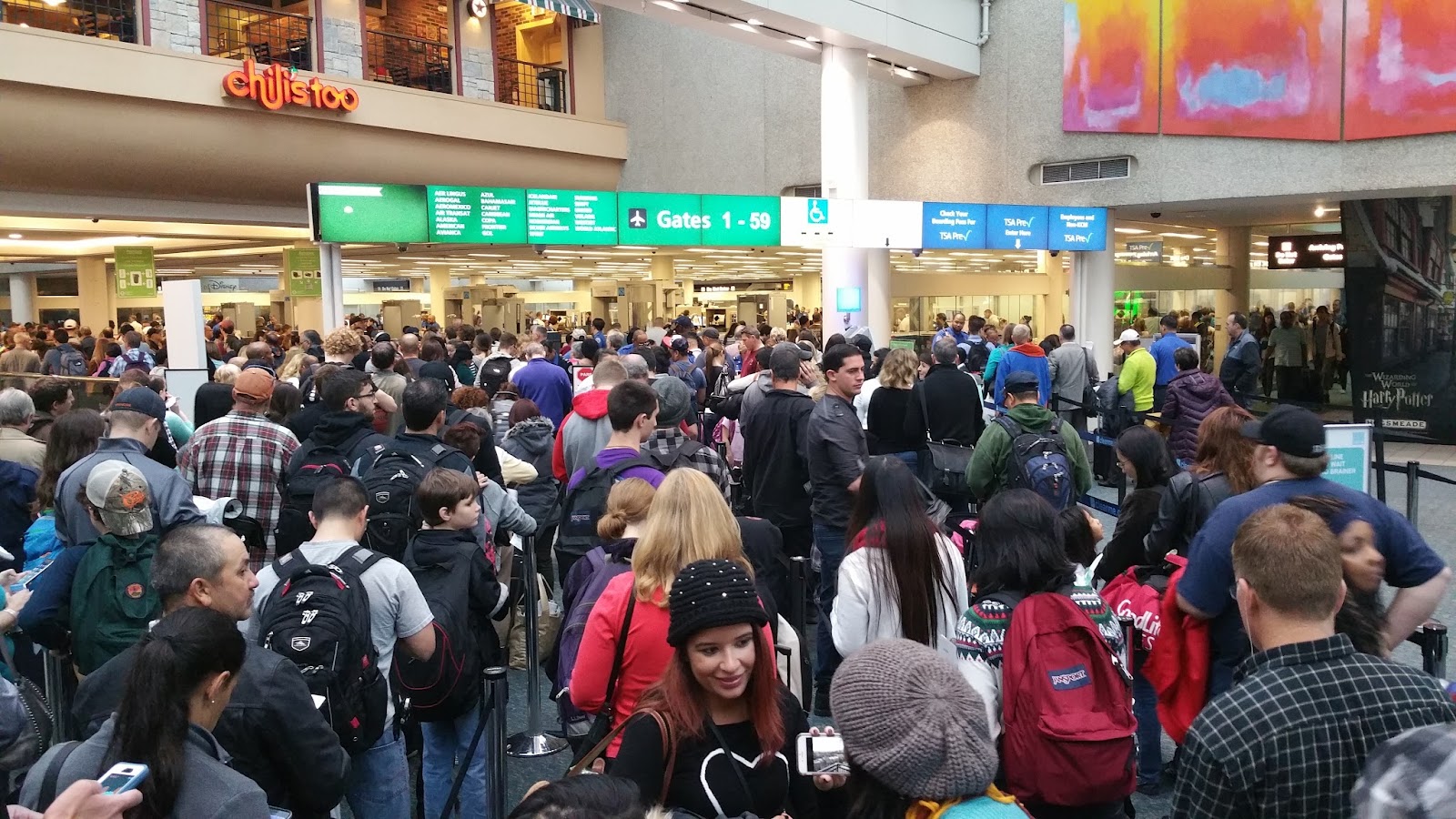
In consideration fo the end-to-end experience, things change dramatically (shall I say become much less “magical”?) once you are put into the hands of non-Disney entities. A sub-contracted bus service takes runners to and from the runDisney Health and Fitness Expo. Gone is the Disney TV and music content, in favor of, in one case, conservative talk radio. Instead of the driver making helpful and exquisitely timed and worded announcements, you have drivers getting lost and instigating arguments with Disney staff at the pick-up spots. The snorkeling excursion off of Nassau put us on a rickety and dirty 3rd party boat. The TSA process at Orlando International Airport (Figure 2), as it has every time I’ve ever used it, was horrendously slow and aggravating, putting one in mind of the refugee camp we see at the beginning of Scarface.
Recommendation: As a Disney guest, I need the entire experience between arriving and departing Florida to have the same groove as my experience under the care of Disney employees, so I maintain good will throughout the trip. Use Disney buses for the Expo; manage the excursions; and dare I say, build a major international airport at Disney World.

20160115_100122.jpg
Figure 2. MCO. It’s not the refugee camp we see at the beginning of Scarface. It’s the start of a typically sweaty and aggravating 35-minute experience at the TSA security checkpoint at Orlando International Airport, Hey Disney, shake these people and build your own airport.

Over-enthusiasm

OK, maybe this isn’t quite fair. Above I gush about the employees, but sometimes you can have too much of a good thing. I don’t need to have every person carrying a broom to ask me how I’m enjoying my vacation. I don’t need the Cruise Director to ask the audience to cheer or scream 8 times before the curtain goes up a live show. And I don’t need to have a cheery 3-minute conversation with the (otherwise wonderful) room attendant about what/how I am doing every time I go near my stateroom.
Recommendation: As a Disney guest, I need the employees to strike the right balance in their interactions, so that I can relax. This is a tough one. I trust that Disney has carefully honed the type of employee personas they want based on what makes their typical guests happy. It’s too much for me, sometimes. Maybe they need to teach their employees to better adapt their approach with guests of different dispositions.

Epilogue

Heavy rains delay our connecting flight home from Richmond to Boston. The best things about Disney become starkly clear in contrast. Suddenly problems appear at every turn. An obviously stressed-out agent at a gate counter becomes borderline abusive to a customer. My chicken wings are lukewarm and have no celery sticks. The pizza place is out of pizza. Oh look, the register at the bar can’t accept credit cards. There’s piss all over the floor beneath the urinals.

Now I wonder. Is the Richmond Airport any worse than any other airport, or is it just following a tough act to follow?

Monday, July 13, 2015

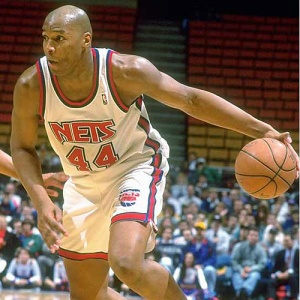
Derrick Coleman: A Draft Pick for the Ages


Unable to consummate a trade, the Brooklyn Nets this week bought out the contract of former all-star point guard Deron Williams. Thus ended a peculiar string that started with the drafting of Derrick Coleman first overall in 1990. Deron Williams holds the same roster spot that Coleman filled with the Nets. We’ll call it the Derrick Coleman Roster Spot (DCRS). Through that 25 year period, the occupant was directly replaced by a marquee trade acquisition six consecutive times. You can make the argument that the Derrick Coleman selection was the most productive draft pick ever. Here is the lineage.


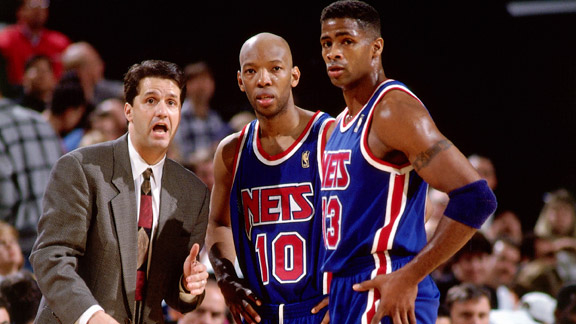
1990 - New Jersey Nets draft Derrick Coleman.
Details: Coleman was selected #1 overall after a successful 4-year career at Syracuse University.


1995 - Coleman traded to Philly for Shawn Bradley.
Details: This was a straight-up one-for-one trade. It was a blockbuster to be sure, but the simplest among the more complex trades to follow.


1997 - Bradley traded to Dallas in a package that brought Sam Cassell.
Details: Dallas got Bradley, Pack, Ed O'Bannon and Khalid Reeves for Jim Jackson, Eric Montross, Sam Cassell, Chris Gatling and George McCloud.


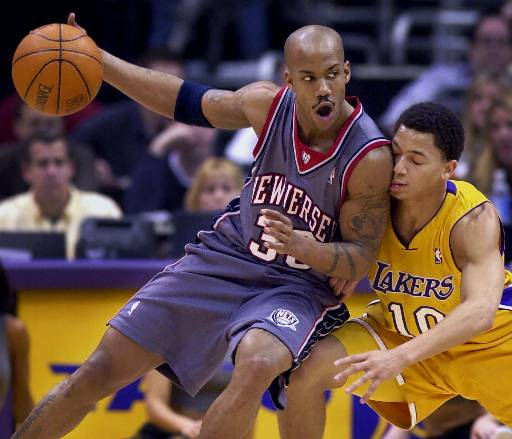
1998 - Cassell traded to Milwaukee in a package that brought Stephon Marbury.
Details: In a 3-way trade, Nets sent Cassell to the Bucks, while the Nets acquired Stephon Marbury from the Minnesota Timberwolves.


2001 - Marbury traded to Phoenix in a package that brought J-Kidd.
Details: Nets traded all-star Stephon Marbury and role player Johnny Newman to the Phoenix Suns for all-star/All-NBA point Jason Kidd and Chris Dudley (whom the Nets later released).


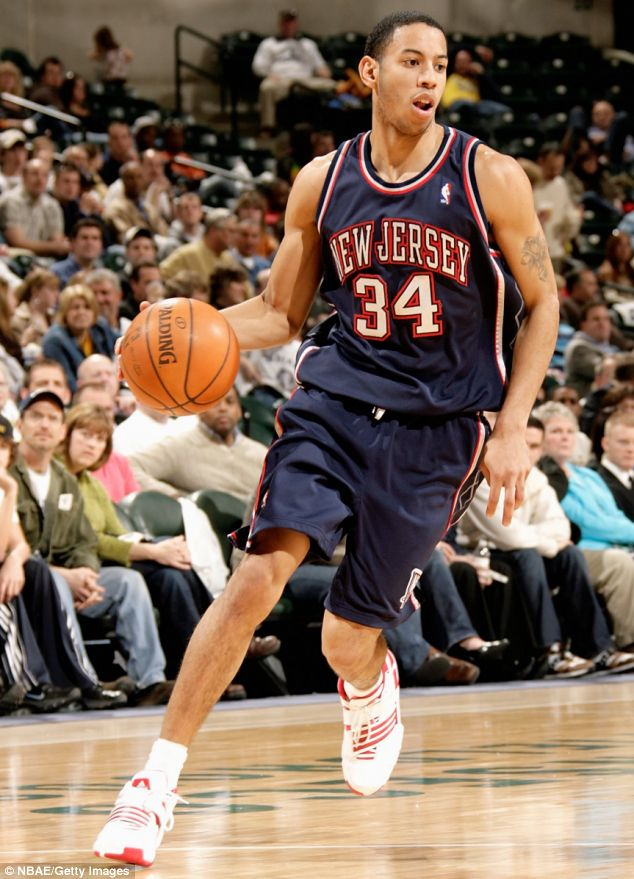
2008 - Kidd traded to Dallas in a package that brought Devin Harris.
Details: Jason Kidd, Malik Allen, and Antoine Wright were traded to the Dallas Mavericks for future Nets All-Star Devin Harris, Keith Van Horn, Maurice Ager, DeSagana Diop, Trenton Hassell, $3 million, and 2008 and 2010 first-round draft picks.


2011 - Harris traded to Utah in a package that brought D-Will.
Details: The Nets made a surprising trade for All-Star point guard Deron Williams. The trade sent Devin Harris and rookie Derrick Favors to the Utah Jazz along with draft picks from the Golden State Warriors and cash considerations.

2015 - Deron Williams brought out by the Brooklyn Nets.
Details: Nets bought out the remaining $43 million on Williams' contract for $27.5 million, with payments to him spread over the next five seasons.

I don’t know if this is a record of any sort, but it is certainly noteworthy. Most stars leave teams through free agency, retirement, being waived, or as in D-Will’s case, being bought out. That the Nets were able to repeatedly trade in a tired, aging or stale star for a younger star with hope so many times, is a testament to, well, something. Note that Williams was born 17 years after Coleman.

Certainly the Nets have not been consistently good in that period, notwithstanding back-to-back NBA Finals appearances with Kidd in the early aughts. But they managed to have five different players at the all-star game from the DCRS. The story of this lineage is the story of the Nets franchise over the past quarter century.

Take a look at the productivity the Nets enjoyed out of the DCRS.

Table 1. Productivity from the Derrick Coleman Draft Pick

Player
Years ★ all star
Games
Points
Assists
Rebounds
Steals
Blocks
Derrick Coleman (b. 1967)
1990-95
5 seasons ★
348
6,930
1,093
3,690
320
559
Shawn Bradley (b. 1972)
1995-97
2 seasons
107
1,318
75
857
64
410
Sam Cassell
(b. 1969)
1997-98
3 seasons
102
1,988
771
316
161
27
Stephon Marbury (b. 1977)
1998-2001
3 seasons ★
172
3,863
1,398
525
221
23
Jason Kidd
(b. 1973)
2001-08
7 seasons
★★★★★
506
7,373
4,620
3,662
950
135
Devin Harris
(b. 1983)
2008-11
4 seasons ★
212
3,747
1,473
645
284
44
Deron Williams (b. 1984)
2011-15
4 seasons ★
277
4,609
2,078
875
314
83
Total for DCRS
25 seasons
★★★★★
★★★★
1724
29,828
11,508
10,570
2,314
1,281

If you consider what that #1 pick in 1990 yielded, it makes for a statistical bonanza. Consider where DCRS would rank among the all-time NBA leaders.
Games: 1,724 - 1st all time, ahead of Robert Parish 1,611
Points: 29,828 - 6th all time, ahead of Shaquille O’Neal 28,596
Assists: 11,508 - 3rd all time, ahead of Steve Nash 10,335
Rebounds: 10,570 - 29th all time, ahead of David Robinson 10,497
Steals: 2,314 - 5th all time, ahead of Mo Cheeks 2,310
Blocks: 1,281 - 47th all time, ahead of Shawn Kemp 1,279

People like to malign Derrick Coleman, saying that he never reached his potential. That may be accurate, but the productivity that the Nets enjoyed out of the DCRS ranks with household names in every major statistical category.

The mix of rebound- and block-happy big men (Coleman, Bradley) blended with assist and steal wizards (Kidd, Williams) yielded a wonderful mix of stats. Any fantasy team owner would drool for these stats.

The aggregation of the DCRS statistics raises the question of comparables. Many of the all-time greats don’t map over so well. Kareem Abdul-Jabbar exceeds DCRS in points and rebounds, but lags badly behind in assists and steals. Steve Nash accumulated assists and steals faster than DCRS, but didn’t have as many rebounds or blocks. Since the DCRS did include that mixture of players from different positions, the best comp I could find was Scottie Pippen, one of the greatest all around players ever.


Table 2. Career Averages, DCRS vs. Scottie Pippen

Player
Years ★ all star
Games/Yr
Points
Assists
Rebounds
Steals
Blocks
DCRS
25 seasons
★★★★★
★★★★
69
17.3
6.7
6.1
1.3
0.7
Scottie Pippen
17 seasons ★★★★★
★★
69
16.1
5.2
6.4
2.0
0.8

As you can see, Scottie is an excellent comp when you compare per game averages. Even the games played per year (both 69) and the all star appearances (a little more than one per three years) is spot on. Now, Scottie had 6 NBA championships and the Nets have 0, so the we can only take the comparison so far.

If I told you in 1990 that the Derrick Coleman pick would yield 25 years of Scottie Pippen-like productivity, would you take it? I would. It’s been a fun ride.

Wednesday, July 8, 2015

Take It Easy on that Waitress. It’s Probably Not Her Fault.

A beautiful summer evening found us sitting outdoors at the new fancy restaurant in town. The hostess brought us menus and the busboy brought us ice water. So far, so good. Fifteen minutes later, Susie the waitress comes to the table, slightly frazzled. She apologizes for the delay, explaining that she has a table of eight that was taking more time than expected. She takes our drink order, returning with said drinks around ten minutes later. My dad, not known for being patient in these situations, flags down the manager and explains how slow the service is. He suggests that the waitress “needs some training.” Yeah, it was a little embarrassing.

“Dad,” I start, after the manager leaves, “you just saw one of the main points of Agile Performance Improvement,” referring to my new book. “I agree that the service is slow, but it’s probably not Susie’s fault.”

Typically, when things go wrong in the workplace, managers (and customers) are quick to point to factors within the individual. “Susie needs some training” is a typical refrain. The cause of the service problem is much more likely in the work environment itself. As Geary Rummler famously said, “when you pit a good performer against a bad system, the system will win almost every time.”

The lesson comes from the field of human performance technology (HPT), one of two, along with agile software development, building blocks of agile performance improvement. In 1978, Thomas F. Gilbert, the “father of HPT” introduced his behavior engineering model as part of his seminal book, Human Competence: Engineering Worthy Performance. Human performance is the product of environmental factors and individual factors. When the consultant performs cause analysis on a problem of human performance, factors in the environment will be responsible most of the time. Some say 85% of the time. This is known as the “85% rule.”

Think of the other reasons, beside Susie’s competence as a waitress, that could contribute to the slow service.
  • There are not enough employees working to handle the volume of business on this particular night.
  • The hostess seats tables unevenly among the service staff such that one waitress becomes overwhelmed.
  • The bar is understaffed, or disorganized, causing cascading delays in all aspects of the service.
  • Problems in the kitchen create holdups in serving other tables, taking Susie away from our table.
  • Susie broke up with the dishwasher last week, and they were outside having an argument in the alley.

OK, the last one is a bit ridiculous. The point is: from where I sit I have no idea why it takes 25 minutes someone to take our order. But, I shouldn’t start with the assumption that Susie needs training, because it’s likely not going to significantly improve things. If I was managing the restaurant, or the restaurant hired me to help with their service problem, I would conduct further analysis to pin down the root causes, speaking with employees and observing the service over the course of several nights.
I don’t work in the restaurant business anymore, but in my role as a performance consultant supporting a large software engineering function, I see this scenario all of the time, at least weekly. A manager will come to me with a request for training, without having considered what performance problem they are trying to solve. They jump to a training solution without identifying the causes of the business problem. Starting with the assumption that whatever is going wrong can be fixed by training the individual will probably not remediate the service disaster in the fancy restaurant. It will just waste everyone’s time and money.

By addressing the causes of problems, instead of the symptoms, businesses will spend less time being industrious in doing things that make no difference.

Read more about Gilbert, the behavior engineering model, and many more examples in Agile Performance Improvement: The New Synergy of Agile and Human Performance Technology.