Monday, July 13, 2015

Derrick Coleman: A Draft Pick for the Ages


Unable to consummate a trade, the Brooklyn Nets this week bought out the contract of former all-star point guard Deron Williams. Thus ended a peculiar string that started with the drafting of Derrick Coleman first overall in 1990. Deron Williams holds the same roster spot that Coleman filled with the Nets. We’ll call it the Derrick Coleman Roster Spot (DCRS). Through that 25 year period, the occupant was directly replaced by a marquee trade acquisition six consecutive times. You can make the argument that the Derrick Coleman selection was the most productive draft pick ever. Here is the lineage.


1990 - New Jersey Nets draft Derrick Coleman.
Details: Coleman was selected #1 overall after a successful 4-year career at Syracuse University.
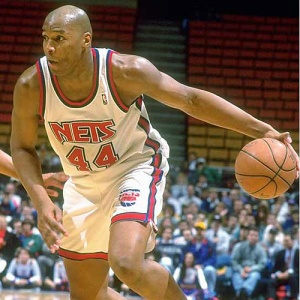


1995 - Coleman traded to Philly for Shawn Bradley.
Details: This was a straight-up one-for-one trade. It was a blockbuster to be sure, but the simplest among the more complex trades to follow.
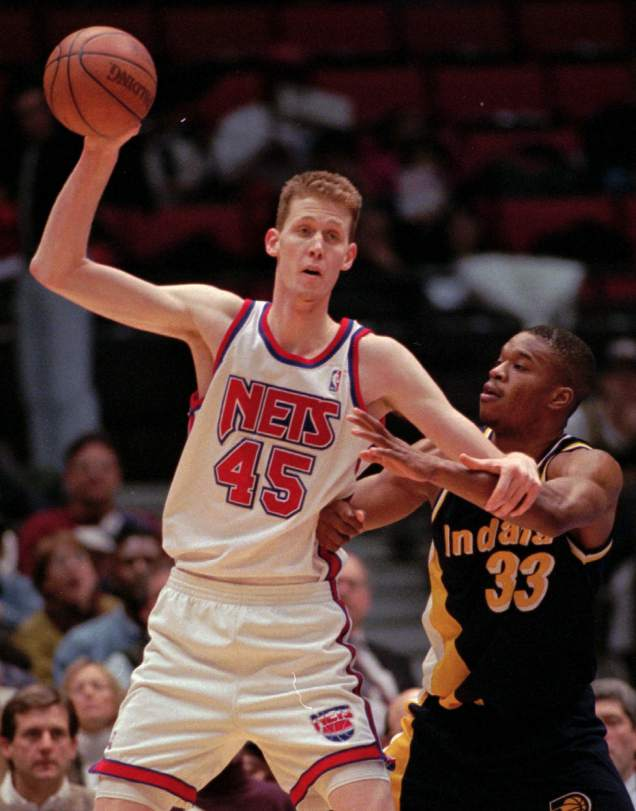

1997 - Bradley traded to Dallas in a package that brought Sam Cassell.
Details: Dallas got Bradley, Pack, Ed O'Bannon and Khalid Reeves for Jim Jackson, Eric Montross, Sam Cassell, Chris Gatling and George McCloud.
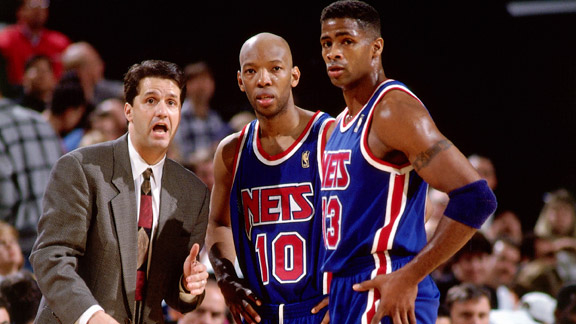

1998 - Cassell traded to Milwaukee in a package that brought Stephon Marbury.
Details: In a 3-way trade, Nets sent Cassell to the Bucks, while the Nets acquired Stephon Marbury from the Minnesota Timberwolves.
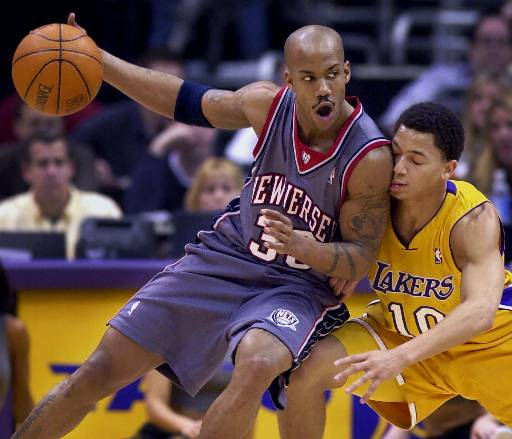

2001 - Marbury traded to Phoenix in a package that brought J-Kidd.
Details: Nets traded all-star Stephon Marbury and role player Johnny Newman to the Phoenix Suns for all-star/All-NBA point Jason Kidd and Chris Dudley (whom the Nets later released).
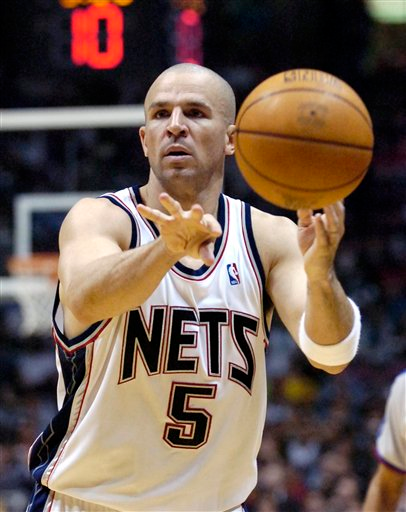

2008 - Kidd traded to Dallas in a package that brought Devin Harris.
Details: Jason Kidd, Malik Allen, and Antoine Wright were traded to the Dallas Mavericks for future Nets All-Star Devin Harris, Keith Van Horn, Maurice Ager, DeSagana Diop, Trenton Hassell, $3 million, and 2008 and 2010 first-round draft picks.
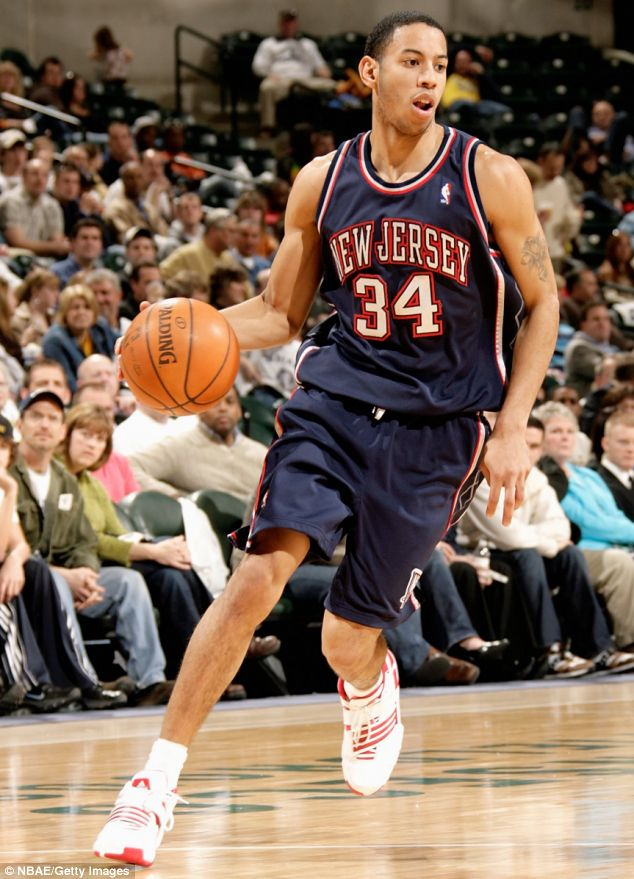

2011 - Harris traded to Utah in a package that brought D-Will.
Details: The Nets made a surprising trade for All-Star point guard Deron Williams. The trade sent Devin Harris and rookie Derrick Favors to the Utah Jazz along with draft picks from the Golden State Warriors and cash considerations.
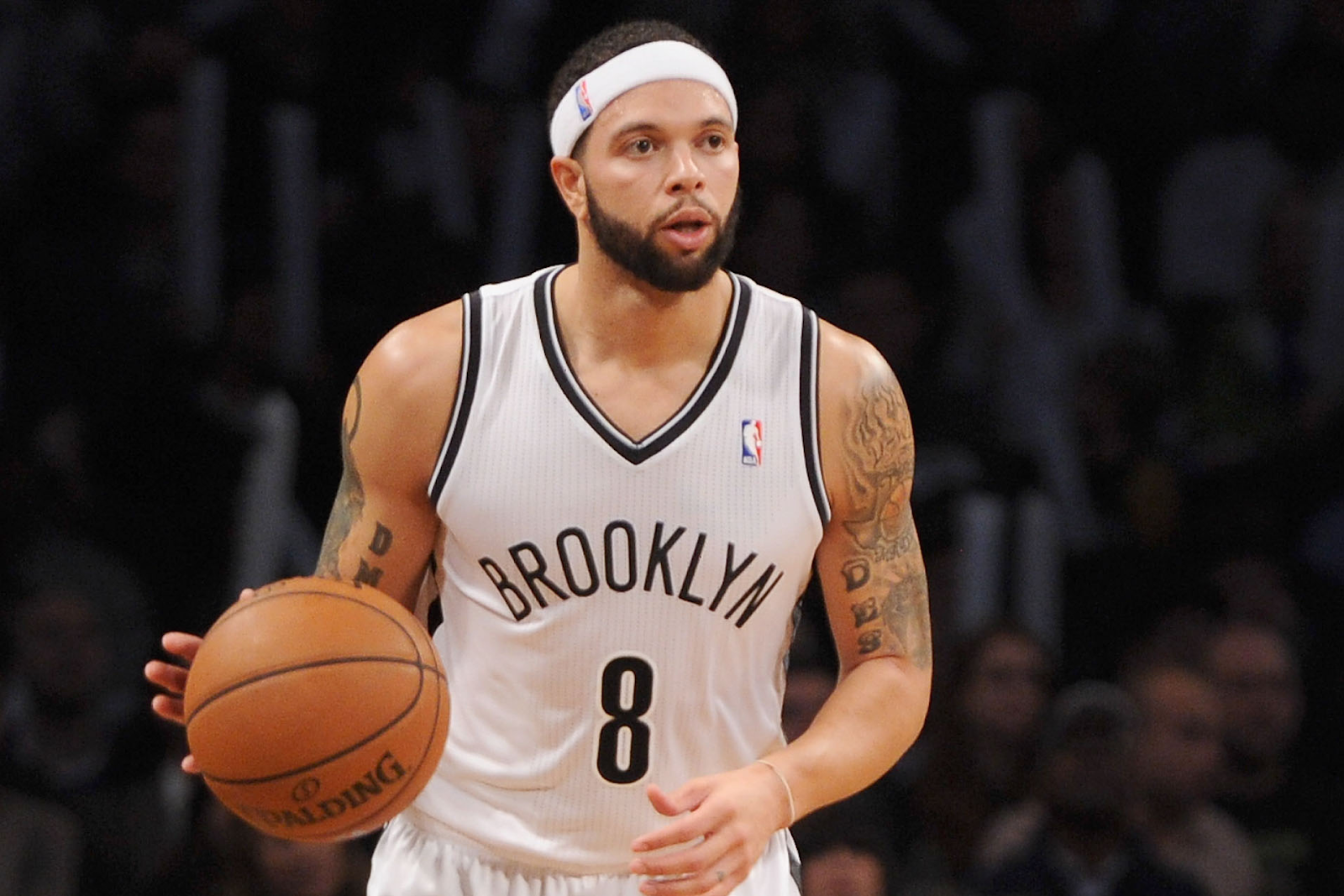
2015 - Deron Williams brought out by the Brooklyn Nets.
Details: Nets bought out the remaining $43 million on Williams' contract for $27.5 million, with payments to him spread over the next five seasons.

I don’t know if this is a record of any sort, but it is certainly noteworthy. Most stars leave teams through free agency, retirement, being waived, or as in D-Will’s case, being bought out. That the Nets were able to repeatedly trade in a tired, aging or stale star for a younger star with hope so many times, is a testament to, well, something. Note that Williams was born 17 years after Coleman.

Certainly the Nets have not been consistently good in that period, notwithstanding back-to-back NBA Finals appearances with Kidd in the early aughts. But they managed to have five different players at the all-star game from the DCRS. The story of this lineage is the story of the Nets franchise over the past quarter century.

Take a look at the productivity the Nets enjoyed out of the DCRS.

Table 1. Productivity from the Derrick Coleman Draft Pick

Player
Years ★ all star
Games
Points
Assists
Rebounds
Steals
Blocks
Derrick Coleman (b. 1967)
1990-95
5 seasons ★
348
6,930
1,093
3,690
320
559
Shawn Bradley (b. 1972)
1995-97
2 seasons
107
1,318
75
857
64
410
Sam Cassell
(b. 1969)
1997-98
3 seasons
102
1,988
771
316
161
27
Stephon Marbury (b. 1977)
1998-2001
3 seasons ★
172
3,863
1,398
525
221
23
Jason Kidd
(b. 1973)
2001-08
7 seasons
★★★★★
506
7,373
4,620
3,662
950
135
Devin Harris
(b. 1983)
2008-11
4 seasons ★
212
3,747
1,473
645
284
44
Deron Williams (b. 1984)
2011-15
4 seasons ★
277
4,609
2,078
875
314
83
Total for DCRS
25 seasons
★★★★★
★★★★
1724
29,828
11,508
10,570
2,314
1,281

If you consider what that #1 pick in 1990 yielded, it makes for a statistical bonanza. Consider where DCRS would rank among the all-time NBA leaders.
Games: 1,724 - 1st all time, ahead of Robert Parish 1,611
Points: 29,828 - 6th all time, ahead of Shaquille O’Neal 28,596
Assists: 11,508 - 3rd all time, ahead of Steve Nash 10,335
Rebounds: 10,570 - 29th all time, ahead of David Robinson 10,497
Steals: 2,314 - 5th all time, ahead of Mo Cheeks 2,310
Blocks: 1,281 - 47th all time, ahead of Shawn Kemp 1,279

People like to malign Derrick Coleman, saying that he never reached his potential. That may be accurate, but the productivity that the Nets enjoyed out of the DCRS ranks with household names in every major statistical category.

The mix of rebound- and block-happy big men (Coleman, Bradley) blended with assist and steal wizards (Kidd, Williams) yielded a wonderful mix of stats. Any fantasy team owner would drool for these stats.

The aggregation of the DCRS statistics raises the question of comparables. Many of the all-time greats don’t map over so well. Kareem Abdul-Jabbar exceeds DCRS in points and rebounds, but lags badly behind in assists and steals. Steve Nash accumulated assists and steals faster than DCRS, but didn’t have as many rebounds or blocks. Since the DCRS did include that mixture of players from different positions, the best comp I could find was Scottie Pippen, one of the greatest all around players ever.
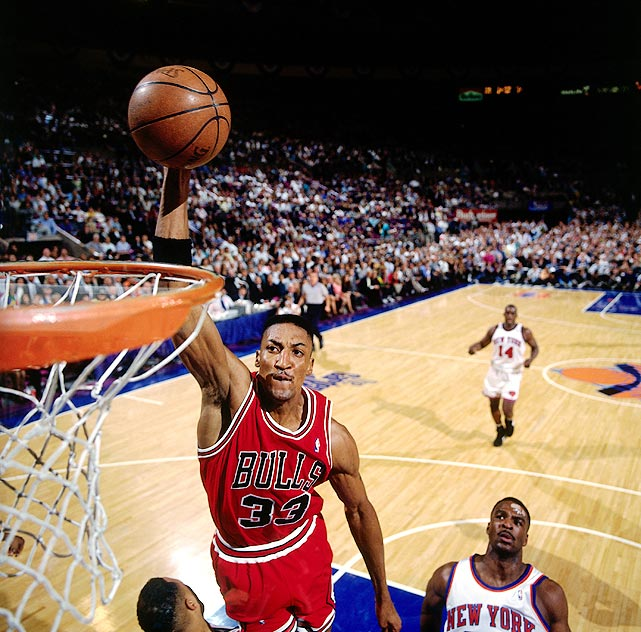

Table 2. Career Averages, DCRS vs. Scottie Pippen

Player
Years ★ all star
Games/Yr
Points
Assists
Rebounds
Steals
Blocks
DCRS
25 seasons
★★★★★
★★★★
69
17.3
6.7
6.1
1.3
0.7
Scottie Pippen
17 seasons ★★★★★
★★
69
16.1
5.2
6.4
2.0
0.8

As you can see, Scottie is an excellent comp when you compare per game averages. Even the games played per year (both 69) and the all star appearances (a little more than one per three years) is spot on. Now, Scottie had 6 NBA championships and the Nets have 0, so the we can only take the comparison so far.

If I told you in 1990 that the Derrick Coleman pick would yield 25 years of Scottie Pippen-like productivity, would you take it? I would. It’s been a fun ride.

Wednesday, July 8, 2015

Take It Easy on that Waitress. It’s Probably Not Her Fault.

A beautiful summer evening found us sitting outdoors at the new fancy restaurant in town. The hostess brought us menus and the busboy brought us ice water. So far, so good. Fifteen minutes later, Susie the waitress comes to the table, slightly frazzled. She apologizes for the delay, explaining that she has a table of eight that was taking more time than expected. She takes our drink order, returning with said drinks around ten minutes later. My dad, not known for being patient in these situations, flags down the manager and explains how slow the service is. He suggests that the waitress “needs some training.” Yeah, it was a little embarrassing.

“Dad,” I start, after the manager leaves, “you just saw one of the main points of Agile Performance Improvement,” referring to my new book. “I agree that the service is slow, but it’s probably not Susie’s fault.”

Typically, when things go wrong in the workplace, managers (and customers) are quick to point to factors within the individual. “Susie needs some training” is a typical refrain. The cause of the service problem is much more likely in the work environment itself. As Geary Rummler famously said, “when you pit a good performer against a bad system, the system will win almost every time.”

The lesson comes from the field of human performance technology (HPT), one of two, along with agile software development, building blocks of agile performance improvement. In 1978, Thomas F. Gilbert, the “father of HPT” introduced his behavior engineering model as part of his seminal book, Human Competence: Engineering Worthy Performance. Human performance is the product of environmental factors and individual factors. When the consultant performs cause analysis on a problem of human performance, factors in the environment will be responsible most of the time. Some say 85% of the time. This is known as the “85% rule.”

Think of the other reasons, beside Susie’s competence as a waitress, that could contribute to the slow service.
  • There are not enough employees working to handle the volume of business on this particular night.
  • The hostess seats tables unevenly among the service staff such that one waitress becomes overwhelmed.
  • The bar is understaffed, or disorganized, causing cascading delays in all aspects of the service.
  • Problems in the kitchen create holdups in serving other tables, taking Susie away from our table.
  • Susie broke up with the dishwasher last week, and they were outside having an argument in the alley.

OK, the last one is a bit ridiculous. The point is: from where I sit I have no idea why it takes 25 minutes someone to take our order. But, I shouldn’t start with the assumption that Susie needs training, because it’s likely not going to significantly improve things. If I was managing the restaurant, or the restaurant hired me to help with their service problem, I would conduct further analysis to pin down the root causes, speaking with employees and observing the service over the course of several nights.
I don’t work in the restaurant business anymore, but in my role as a performance consultant supporting a large software engineering function, I see this scenario all of the time, at least weekly. A manager will come to me with a request for training, without having considered what performance problem they are trying to solve. They jump to a training solution without identifying the causes of the business problem. Starting with the assumption that whatever is going wrong can be fixed by training the individual will probably not remediate the service disaster in the fancy restaurant. It will just waste everyone’s time and money.

By addressing the causes of problems, instead of the symptoms, businesses will spend less time being industrious in doing things that make no difference.

Read more about Gilbert, the behavior engineering model, and many more examples in Agile Performance Improvement: The New Synergy of Agile and Human Performance Technology.

Friday, January 30, 2015

Coming Soon: Agile Performance Improvement, the book

If you follow this blog, you might have noticed that I haven’t put anything new up here for a while. That’s because I have been putting all of my writing energy into a book, which develops the concept of the It Ain’t Training blog.

The book is called Agile Performance Improvement: The New Synergy of Agile and Human Performance Technology. It will be published by CA Press later in 2015. Here’s the description, from my book proposal:

“Agile Performance Improvement bridges the disciplines of agile and human performance technology, showing how to apply agile principles and techniques to the practice of performance consulting and v.v. The author, who has worked extensively on both sides of the traditional engineering─HR divide, provides a light-hearted but illuminating look at what happens when the geeks encounter the people people.”

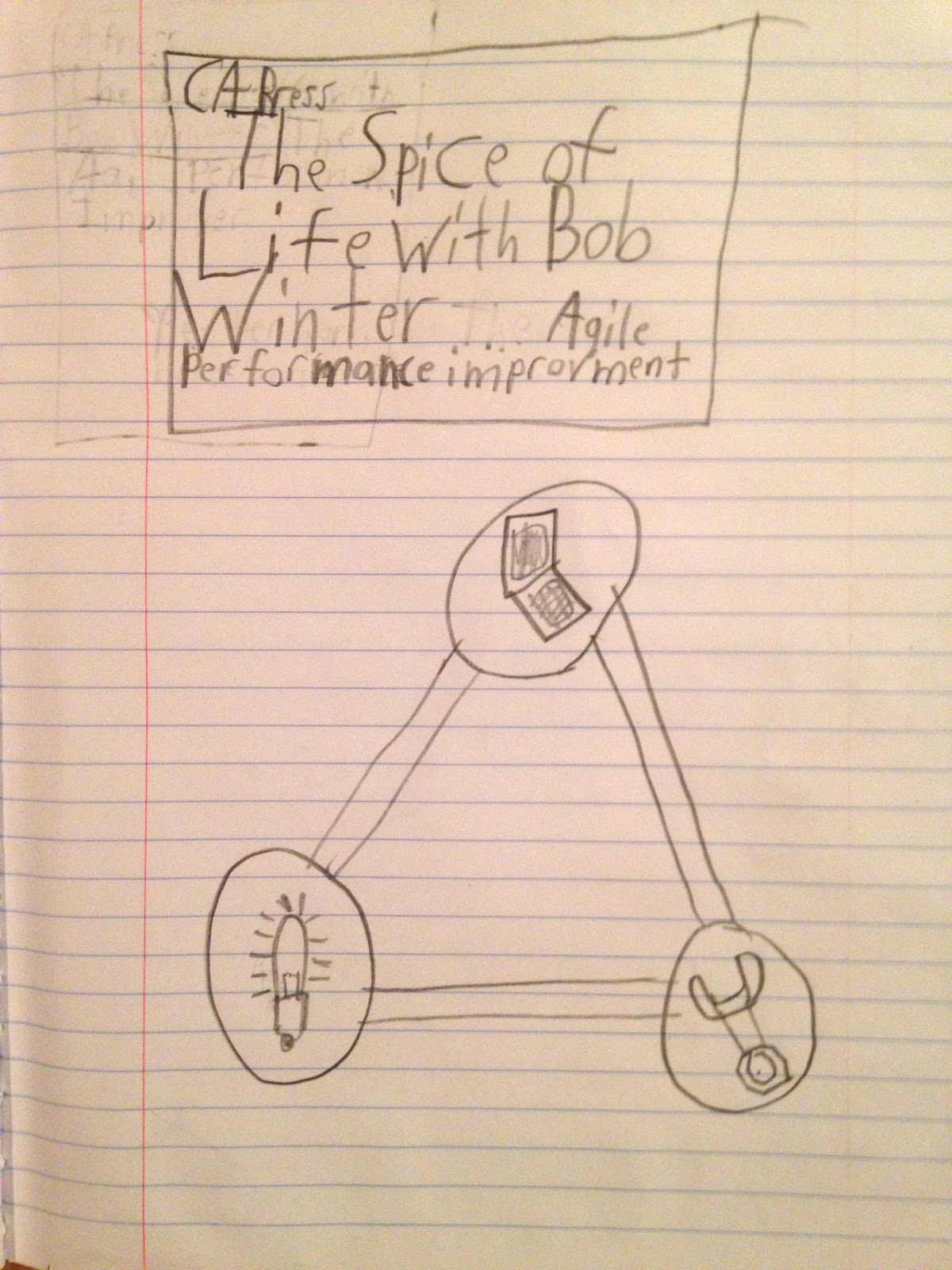
Below is my 9-year old son’s conception of what the book will be. Unfortunately, my editors won’t use his idea for title and book cover, but it’s pretty amusing anyway.

spiceoflife.jpg

Sunday, September 28, 2014

Skatepark as Organic Learning Environment

Displaying photo.JPG

The Ann Arbor Skatepark opened this year. It is a $1 million, 30,000 square foot wonderland of, well, all sorts of things that are great for skateboarders. As described by the City of Ann Arbor website,
Skateboarders will enjoy features such as kidney pools from 5 feet to 9.5 feet deep, a snake run, clover and flow bowls, rock ride and a slappy curb. Landscape features being incorporated into the design include native plants and bioswales and retention areas that exceed standard stormwater requirements.
I can’t really describe how cool this little place is. On a sunny mild Saturday in September, my son joined around 50 kids of all ages (well, not all ages, but every age from 5 to 30, notwithstanding my bruising 5 minute foray) having an absolute blast on skateboards, inline skates and Razor-type scooters.
What struck me was the park as an organic learning environment. The skater ethos and indeed the park's official etiquette and rules emphasize that there is no structure, no competition, and, especially, no coaching by parents. As such, I struggle to build even a flimsy metaphor or analogy to suggest how we might create more effective corporate (or for that matter, youth sports) learning environments. There are many clichés to describe the learning dynamic that we struggle to create in a more deliberately controlled setting. The cliches become beautiful realities in the skate park, without a whiff of irony or cynicism:
  • Forming communities. The vast majority of kids were riding skateboards, with just a few on scooters and inline skates. Three of the better scooter riders found each other, and began travelling as one through the park. They would stop together and confer about how to do a trick or navigate the next feature. Nobody had to formally identify them as the best practitioners of their craft or bring them together so they could learn from one another. They just did it.
  • Raising the bar. A group of four skaters is flying repeatedly over a set of stairs that is part of the park. Clearly, they are among the few that can do that trick, with grabs, ollies, and other variations thrown in. When that trick becomes easy, they set up their own challenge. They lay down a plastic garbage barrel at the top of a ramp and start trying to jump over it on their boards. If these kids were under the direct supervision of a manager, they wouldn’t be allowed to move the garbage can, and they would also be less safe practicing the same difficult trick using an existing park feature (namely, a cement barrier).
  • Informal coaching and mentoring. For a few minutes, I observed the skateboarding of one young man I’ll call the Smooth Skater Wearing a Knit Cap on an 80 Degree Day. He was rolling along by himself all around the park, and I was struck by the fluidity of his skating and his occasional tricks. In my eyes, he was the best skater in the park, but he was by no means a show-off. All of the sudden, Smooth Skater stops next to a kid half his age, and gives him some coaching. Hey, Lil Bro, he seemed to be saying, you need to get more springiness in your knees as you go over the slopes, like this. Smooth Skater provides a quick demonstration of what he means by springiness in the knees, and watches as Lil Bro tries it. Then Smooth Skater shows him how one would apply the springy knees technique on a small slope about 5 feet away. He taps Lil Bro on the chest with the back of his hand and skates away. The whole thing took no more than 15 seconds. Lil Bro starts practicing the springy knee thing, statically at first, then down some easy ramps. It was a beautiful interaction, initiated by someone I’m sure never went to a corporate coaching class and never entered into a formal mentoring agreement, with Lil Bro or anyone else.
  • An environment of trust, where mistakes are OK. Without a delineated path and dozens of kids doing their own thing in a relatively small space, there were collisions, near collisions and other mishaps occurring every few seconds. If one kid bumped into or cut off another, they both got up, someone said “are you OK?” and someone said “sorry, Bro.” They shared a fist bump or a laugh (more often both), and they moved on. You know what I did not see any of, in a full hour of observing the skatepark? Injuries, flaring tempers, hurt feelings, or interventions by authority figures.


How do these things just happen at the skate park, yet they happen only through great effort or divine providence in the large workplace? It is the design of the environment? Is it the bringing together of like-minded people? Is it the passion? Is it the wider culture of this hobby?
I don’t have good answers to these questions, but I'll keep thinking. I’d love to hear your ideas in the comments.